 Few traffic enforcement schemes raise the ire of the modern driver more than electronic ticketing. These systems take several forms, including speed enforcement, toll booth cameras, and the like. One type of ticketing system considered particularly annoying to many drivers, and perhaps even downright dangerous, may also be the most unethical. It's the red light camera.
The traffic light is crucial to safety at an intersection. It is designed to keep the flow of traffic moving in multiple directions in a regimented and organized way. Of course, the effectiveness of this device depends on the full compliance by every driver to obey traffic light signals, without exception. Go on green, slow and prepare to stop on yellow, and come to a full stop on red. It's a simple concept for drivers to understand and follow, and for most part the system works very well.
The downside to this system is that it relies on the willingness of every driver to follow the rules completely. The truth is, drivers are not machines, they are human, and being human, they do not always follow the rules. If one person does not obey the traffic light signals, particularly when the light turns red, the results can be more than just disruptive, they can be deadly.
For this reason, there are laws to ensure compliance by all drivers, and law enforcement agencies invoke tickets, fines and other penalties to deter those drivers who violate them.
Unfortunately, things happen, sometimes intended, sometimes not, and a driver may run a red light, placing that individual and everyone else around at risk.
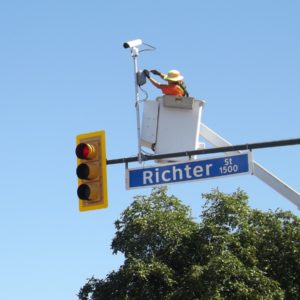
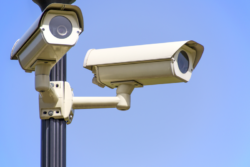
Enter the red light camera. Cameras are placed at an intersection to monitor red light runners and catch them in the act, recording their moving violation for ticketing electronically by mail.
At the outset, the concept of the red light camera is a logical one, an almost foolproof, technologically advanced solution to purportedly save lives. In fact, studies have shown that in many cases, red light camera ticketing systems reduced the number of front and side collisions at intersections by as much as thirty percent! Certainly there is no downside to that!
But like every coin, there is another side to the story. In addition to tickets, red light cameras also generate ticket revenue, a lot of revenue. Red light camera systems bring in millions to the companies that operate them, and contribute serious cash to city coffers and municipalities that allow them to be installed.
On the surface, that doesn't seem like such a bad deal. Enforce the traffic laws, save lives, and profit in the process. It's a win-win, right?
Well, not exactly. In many situations, it's more like a win-lose.
For one, The companies that install and operate these devices are not law enforcement agencies, nor are they DOT engineers. Yet, it seems that the contracts with these companies allow them to have a lot of latitude in the decisions as to where and how these red light cameras are installed and used.
One would think that these red light cameras would be placed at the intersections which need them the most to deter violators and increase traffic safety. Some of these intersections are not always high traffic areas, they are simply more dangerous and prone to accidents caused by red light runners.
Instead, more often than not, the cameras wind up installed at the busiest intersections rather than the most dangerous ones, with the placement simply based on the volume of traffic at an intersection, nothing more. Such arbitrary placement raises the suspicion and argument that red light cameras exist to raise revenue, not promote safety, especially when they are installed in cash strapped communities.
Another issue is the yellow light. The yellow light was initially created as a safety feature of the conventional traffic light system. It exists to warn drivers that the light is about to turn red, allowing the drivers time to prepare for a safe stop.
But that's not its application at many intersections where red light cameras are installed. To increase the likelihood of catching, or to more accurately put it, ensnaring red light runners on camera, the yellow light is often shortened considerably, sometimes to only one or two seconds, giving the driver little to no preparation at all to safely stop in time. Some drivers have even reported the complete absence of the yellow light, increasing the chances of causing an unintentional violation, an accident, or both.
And there's more. Other studies have shown that while red light cameras reduce the number of front and side collisions, the number of rear-end collisions actually increase by roughly the same margins, thereby offsetting the reduction of the others. Sometimes known as the bumper car effect, these collisions occur when drivers suddenly slam on their brakes to avoid an instantaneous red light camera trap and get rear ended by one or more vehicles behind them who were also caught by surprise. It is a rather common occurrence and supports the argument that the red light cameras themselves are a safety hazard. It is also a detail often glossed over or omitted from studies performed that favor these devices.
That's not all. These red light cameras are supposed to catch violators who blow through an intersection after the light turns red. Unfortunately, they are often set up so that drivers who are already in the intersection lawfully when the light changes may be caught and ticketed as well. This can often occur if a driver is stuck in an intersection while waiting to make a left hand turn and oncoming traffic is heavy or the driver yields to pedestrians in the crosswalk towards which the vehicle is turning.
In addition, the sensors for these red light cameras are often calibrated to detect a vehicle that may cross the stop line at an intersection or overshoot it a little. In this scenario, the vehicle certainly comes to a full stop and doesn't run the light. The driver may have merely misjudged the line, or perhaps overshot it a little bit if the light changed to red without ample warning and forced a sudden stop. In this case, the driver would clearly be attempting to obey the law, but gets ticketed anyway.
These red light cameras have also been known to catch and ticket drivers who makes a right hand turn at a stoplight, at intersections where it is perfectly lawful to do so. Getting a ticket for obeying the law doesn't exactly generate the warm fuzzies for red light cameras, or for the entities that run them.
It doesn't help when a red light camera is set up in such a way that it captures the driver of the vehicle that allegedly commits the violation, but tickets the owner of said vehicle and holds that individual liable. The driver and owner are not always one and the same, yet the system doesn't seem to care. This certainly isn't fair, and adds more ammo to the argument that red light cameras do not exist to promulgate safety, prevent accidents or punish transgressors, but simply to produce profit, and as much as possible, any way they can.
It added points on your license? You weren't at the wheel? Too bad. Sorry for you. It doesn't matter who gets the ticket, as long as it brings in the revenue.
Of course, these electronic tickets generated from red light cameras can be contested in traffic court. Many are, and often successfully so. However, the tickets are usually priced strategically at a threshold, not to deter red light running, but to maximize the odds that the unlucky recipients will decide to simply pay the ticket instead of disputing it. After all, taking a day off to go to court, especially if it's not in your immediate area, is a hassle. And if you live in another city or another state, it may cost more to make the trip to the courthouse than the ticket is worth.
The red light camera companies know this. The cities that cater to them know this too. They're not just aware of it. They may even be counting on it.
The dark alliance between these red light camera companies and the municipalities that patronize them is a troubling one, especially considering some of the practices involved in the installation and operation of these devices in many areas of the country. For municipalities blinded by dollar signs, the lure of easy revenue under the pretense of public safety is difficult to resist. For red light camera companies, their past performance and ethics - or lack of them - clearly indicate it's all about the money.
Many drivers are exasperated with the red light camera systems, and some are just fed up. They view them as revenue streams for governments while increasing risks on roads. Many consider red light camera systems unethical, and even downright dangerous. Many view them as accidents waiting to happen.
Fortunately, a few states are listening to drivers, and are addressing the issue of red light cameras by enacting some restrictions on their use, or passing legislation to ban them altogether.
One state that paved the way was Mississippi. In 2009, the state passed a law to remove existing red light cameras and outlaw the installation of any new ones. Arizona said goodbye to red light cameras the following year. Several other states also banned red light cameras, and many more passed laws to restrict their use to certain locations, jurisdictions or situations.
The latest state to join the caravan is Texas. In June 2019, Texas banned the use of red light cameras. It also plans to remove existing systems already installed across the state at the end of their contracts. Here is a list of states that currently ban red light cameras.
Although some states now have laws on the books that prohibit or limit the use of red light cameras, there are many more states that either embrace these devices, or have no laws on their use at all.
If you live in or visit an area equipped with red light cameras, be mindful when driving through intersections on those roads. Here are a few quick tips to make it past a red light camera lawfully, safely, and avoid a ticket:
- Be careful when approaching such intersections.
- Provide as much distance between you and the vehicle ahead as is reasonably possible.
- Be prepared to stop with little to no warning.
- Avoid sitting in the middle of an intersection while waiting to make a left hand turn.
- Don't pull out into an intersection to turn if the light is changing.
- Avoid leaning past the stop line when stopping at an intersection with a red light.
- Also, be extremely careful when making a right turn on red. It may be legal, but it may not stop you from getting an electronic ticket anyway.
Many drivers are particularly anxious about intersections equipped with red light cameras, and try to avoid them altogether when possible. Some intersections have them, others don't, so one may be able to plan a route with a minimum number red light cameras on the way, and in some areas it may be possible change your route to avoid them altogether. This is where a radar detector can help.
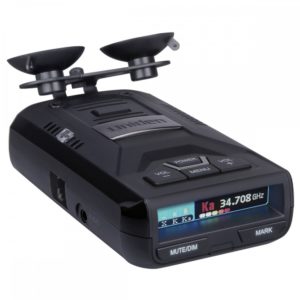
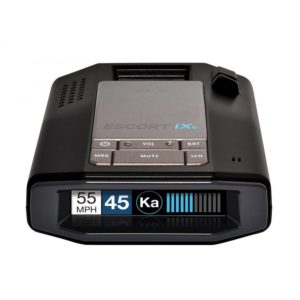
Many radar detectors available today feature red light camera detection. These detectors are usually equipped with a database of all known locations and intersections where red light cameras are installed or actively in use. Here is a list of current radar detectors with red light and speed camera detection.
There are also products available that offer a countermeasure for red light and speed camera systems. They can be an economical and somewhat effective type of camera defense, however they may or may not be legal in some states. Check the state license plate laws for your jurisdiction before you invest in one of these countermeasures.
What do you think? Are red light cameras safety devices, or safety hazards? Are red light cameras unethical? Leave your comments below.

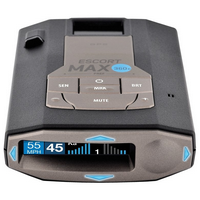
 Many newer and high end radar detectors now include a feature called IVT filtering. What is radar detector IVT filtering? We're glad you asked.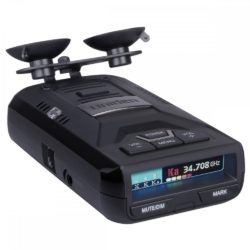
 The
The 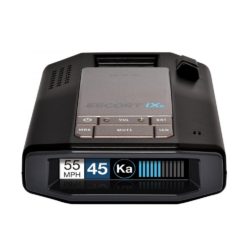
 When
When 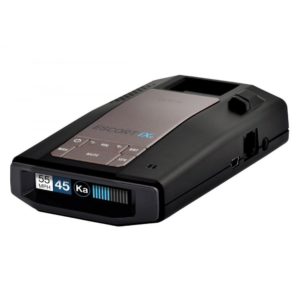 WiFi
WiFi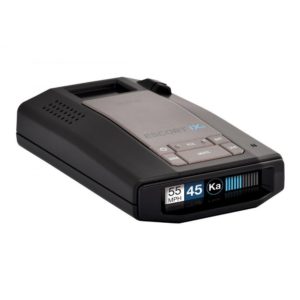 Improved IVT Filtering
 The advances in vehicle safety technology throughout the last decade are changing the rules of the road for drivers. One area that is feeling significant impact is in traffic and speed enforcement detection, or more specifically, the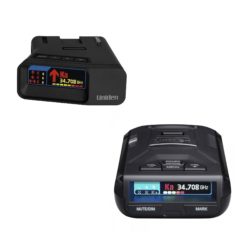
 Not long ago,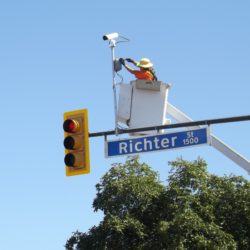
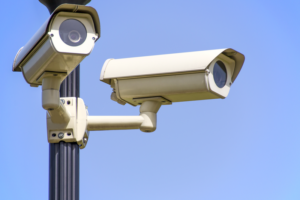 Among electronic ticketing systems now in use across the US, The red light camera is perhaps the most controversial. It is the bane of many a driver, and can cause considerable anxiety on the road.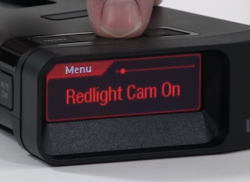
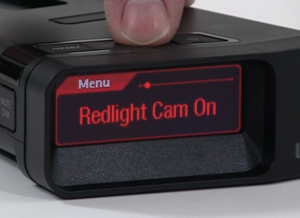 Red light cameras are the bane of many drivers, and can make some of them quite anxious. This can be especially stressful when traveling through an unfamiliar area where red light camera systems may be installed, but not advertised.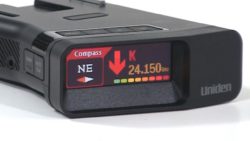

 A
A 
