« January 2006 | Main | March 2006 »

February 24, 2006

Cobra Radar Detector Comparison

Ok, I realize that our selection of Cobra radar detectors has gotten quite large. With the 2005 models, PRO series models and now the new 2006 models, I can understand if those shopping for a Cobra are just a little overwhelmed :)

Anyway, below is a small chart that should make it a little easier to see the differences between the models. The biggest differences are in which models include POP mode detection, a text display, voice alerts and a compass, so those are the features we will list. Confused about what features are important? Check out our What To Look For In A Radar Detector guide.

  POP Text
Display
Voice
Alerts
Compass
2006 Models  
XRS-9730 X X X X
XRS-9630 X X   X
XRS-9430     X  
XRS-9330        
PRO Series  
XRS-9780 X X X X
XRS-9680 X X   X
XRS-9480     X  
XRS-9380        
2005 Models  
XRS-9700 X X X X
XRS-9600 X X   X
XRS-9500   X X  
XRS-9400     X  
XRS-9300        
ESD-7000        
Other Models  
ESD-9215     X  
ESD-6060        

February 22, 2006

New PNI Steel Eye Rechargeable

PNI has a new detector launching this April: the rechargeable Steel Eye RW3100. The RW3100 will be competing directly with the Whistler 1788, currently the only rechargeable radar detector on the market. At a glance, it looks as if the new Steel Eye will have a few advantages over the 1788.

The RW3100 is lighter, weighing in at 5.6 oz. compared to 10.5 oz. for the 1788. The new Steel Eye will fully charge the batteries in 2.5 hours (compared to 10), and the batteries will last for 25-32 hours with POP detection enabled and 30-40 hours with POP mode disabled. The Whistler 1788's batteries last a maximum of 20 hours.

We'll have to wait and see if the new Steel Eye performs any better than the old one. Last July, RadarTest.com compared the Whistler 1788 and the original Steel Eye and found the 1788 to be the clear winner.

The new rechargeable Steel Eye will sell for $179.95.

February 20, 2006

Shipping Information

I just want to take a minute to clarify with everyone how our shipping options work. We occasionally get emails that go something like this:

Hi. I placed an order on Thursday with 2 day delivery. It is now Monday morning and I don't have my package. Please refund my shipping.

In almost all of these cases everything is on schedule, but the customer was a little confused about how the shipping options work. To figure out when you will get your package, you can't count the day the package ships or weekends.

A "Next Day" package shipped on a Wednesday will arrive on Thursday. A "Two Day" package shipped on Thursday will arrive on Monday.

You can refer to our policies page for more details, or contact us if you have any questions.

February 15, 2006

Bel 945 Closeout Special

We've still got a few Bel 945's that we need to move, so we're dropping our price by $20. While supplies last, you can get one for only $149.99. We'll even throw in free shipping. This is a good opportunity to pick up a top performing Bel radar detector for under $150.

The Bel Vector 945 is a discontinued model, and was replaced recently with the Bel Vector 955.

February 14, 2006

Defense Against Police Laser

The use of LIDAR (laser) guns by police to detect vehicles speed is growing rapidly throughout the United States, as well as the world. With this growing threat, it is very important that drivers realize that a radar detector alone should not be trusted to protect them from laser. In this post, I want to explain in basic terms how police laser works and why it is difficult to successfully detect. I will also point out several products that are effective at slowing down or stopping this threat.

How Police LIDAR Guns Work

Before you can defend yourself against LIDAR, it helps to have a basic understanding of how it works. Police laser guns release a narrow beam of light at a targeted vehicle. Portions of this light are reflected off the vehicle and back to the laser gun. From this reflected light, the laser gun can calculate the speed of the vehicle.

In order for the laser gun to calculate a vehicles speed, the light has to be reflected back to the gun. Because of this, police are trained to target the more reflective areas of the vehicle. Typically this is the front license plate, headlights, or perhaps a shiny front grill.

Why Is Laser A Problem For Radar Detectors?

With regular old police radar guns, the actual radar signal is very wide and it bounces off just about any obstacle in its path. This makes radar comparatively easy to detect because, even with instant-on radar, your detector will typically "catch a bounce" when the officer targets another vehicle around you.

At 1000 feet the laser beam is only 2 feet wide and, unlike radar, it doesn't "bounce". This narrow beam has to actually hit your radar detector before it will produce an alert. In most cases, the police officer will be targeting your car before your detector alerts you and, since the laser gun can calculate your speed in less than a second, you will not have time to respond before getting a ticket.

Luckily, there are several choices, both active and passive, available for those looking for a solution to police laser.

Laser Jammers

The best defense against police laser is a laser jammer. Laser jammers are an active defense against laser, actually interfering with the light from the laser gun. A laser jammer will block the light from the laser gun, preventing the gun from calculating a speed.

According to recent tests, the best laser jammers currently available are made by Blinder. The Blinder M20 provides 2 transceivers, which will provide coverage for the front of a vehicle or both the front and rear of a motorcycle. The Blinder M40 includes 4 transceivers, enough to cover both the front and rear of a typical vehicle.

We also offer the LaserPro 905 from Bel and the Shifter ZR3 from Escort. These jammers also tested very well and will integrate with your high end Bel or Escort radar detector.

Passive Solutions

If the laser gun can't find a reflective surface, it can't provide the vehicle's speed. It's as simple as that. Passive laser defense products work to make your vehicle less reflective. If the police officer needs to hit your vehicle for several seconds before he can get your speed, that is time for you to respond to your radar detector's "LASER" alert and slow down.

Laser Veil is the best passive solution available, and is far less expensive than a laser jammer. Laser Veil is a translucent paint-like substance that you apply to the reflective areas of your car, such as the headlights, fog lights and license plate. It makes these areas much less reflective, which could significantly reduce the range of a laser gun.

Laser Veil has been tested and was found to be quite effective. It can even be used in combination with a laser jammer to reduce laser punch-through, making your jammer even more effective.

The Laser Shield is a non-reflective license plate cover. Since police are trained to first aim the laser gun at a license plate, using a Laser Shield could buy you a couple of seconds if you have a good radar detector. However, you have to keep in mind that it only covers the license plate, so the police officer will usually pan right to the headlight if he isn't getting a speed from the license plate.

We have found that the best passive solution involves a combination of Veil and a Laser Shield. The manufacturers of Veil recommend against applying Veil directly to a license plate, so the Laser Shield is a perfect compliment. Apply Veil to the headlights and fog lights of your vehicle, then to a Laser shield. Place the Laser Shield over your license plate, and you're in business.

February 10, 2006

Different Versions of the Whistler 1788

It has been brought to my attention that there are some stores selling the Whistler 1788 cordless radar detector considerably cheaper than BuyRadarDetectors.com. I did a little research, and just wanted to let everyone know that this cheaper version is a little different than the package that we are selling. Whistler 1788's that come from us include a home battery charger. This home charger is not included in the "cheaper" package.

New Whistler Radar Detectors - Details

I have received more detailed information on the new 2006 Whistler models. They have some very interesting models coming out, with some features that are truly new to the radar detector world.

All of the 2006 models are part of a new series, called the "XTR Series". This XTR series seems to break down into two sets of detectors. For lack of a better name, I'll call them the "Changeable Trim Models" and the "Remote Control Models".

One thing that seems to be common to all XTR models is a different type of text display. All of the models with an alpha-numeric text display have the same blue-back-lit display of the Whistler 1788 cordless detector. Prior to the 1788, Whistler detectors had always had red or blue text on a black background.

While there is no definite release date, we are hoping to have these models in stock in April.


Changeable Trim Models

The XTR-325, XTR-425, and XTR-560 detectors make up the set that I'm calling the "Changeable Trim Models". These models are all shaped similar to previous higher end Whistler detectors such as the Pro 73, but they have added a plastic trim ring to the top of the detector. The trim ring can be switched out with different colored rings. Three rings are included with each model.

All of these models will detect the Ku band. Whistler doesn't believe that the Ku band will be a threat in the US in the near future, so they are not planning to promote the Ku feature. By default, detection of the Ku band will enabled in these models, however it is user selectable and can be disabled.

All of these models are compatible with the programmable Intelli-Cord.

Two of these models offer programmable alerts. The XTR-425 has a programmable text display, which means you can change the text CITY or HIGHWAY (or a few others) to say anything you want, within certain limitations (8 characters or less). The XTR-560 also has programmable audio alerts. This will let you record your own alert tones and assign it to any band, replacing the internal alerts.

Here's a little more about each model:

The XTR-325 has voice alerts, an icon display with numeric signal strength indicator, and includes red, blue, and gold trim rings. MSRP is $129.95. Our site will probably have it initially priced at $89.99.

The XTR-425 also has voice alerts, but adds a programmable text display. White, silver, and red trim rings are included. MSRP is $139.95. Our initial price will likely be $99.99.

The XTR-560 is the top of the line XTR model, adding programmable voice alerts to the programmable text display. The included trim rings are black, blue, and pink. MSRP is $199.95 but we will probably have it for $139.99.

Whistler XTR 325 Whistler XTR 425 Whistler XTR 560
XTR-325 XTR-425 XTR-560


Remote Control Models

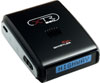
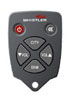
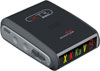
The XTR-220 and the XTR-520 are targeted at customers driving vehicles with a hard-to-reach windshield. Instead of stretching to reach the detector, they can control all of the major functions from a key chain remote. With no buttons on top of the detector, these two detectors have a look different from previous Whistler models.

These models will not detect the Ku band, nor will they be compatible with the Intelli-Cord. At this time, no other models will be "remote compatible".

The XTR-220 has an icon display with numeric signal strength indicator. MSRP is $119.95. Our site will probably have it initially priced at $79.99.

The XTR-520 adds voice alerts and a text display. MSRP is $159.95, but our price will likely start at $109.99.
Whistler XTR 220 Whistler XTR 520 Whistler XTR Series Remote
XTR-220 XTR-520 XTR Remote


FuZion Installed Detector

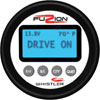
The new FuZion radar detector is basically a Whistler Cruisader that is made for regular vehicles. Like the Cruisader, the FuZion will fit in a standard 2 1/16 gauge or pillar enclosure. People love this about the Cruisader, so it should be a big hit with the FuZion. The FuZion will not detect the Ku band.
Whistler FuZion
FuZion

That's all for now, but I will provide more information on these new models when I receive it!

February 08, 2006

Difference Between the Cobra XRS 9700 and PRO 9780

Cobra has many different models. Choosing between them can be difficult. One question that we're always being asked is: What's the difference between the Cobra 9700 and the Cobra 9780? As far as the radar detectors themselves, there is no difference at all. The PRO 9780 does include a few add-ons that people seem to like: an aluminum travel case, a hardwire cord, and a cigarette lighter splitter.

While I'm at it, the Cobra PRO 9680 and the PRO 9580 are also identical to the XRS 9600 and XRS 9500, respectively, aside from the included accessories.

Also, you guessed it, the PRO 9480 and PRO 9380 are no different than the XRS 9400 and XRS 9300. Unlike the other PRO series models, however, these don't even include those extra accessories. My advice on the 93xx and 94xx? Buy whichever one is cheaper.

February 06, 2006

Whistler Cruisader In A Car?

People just love the fact that the Whistler Cruisader radar detector can be mounted in a standard 2 1/16 inch gauge enclosure! Since this is the only detector on this market with this feature, we are always getting asked if the Cruisader will work in a car, as well as a motorcycle.

The answer is yes, you can use a Cruisader in a car, but there are a couple of things to watch out for.

The most frequent problem is the wire length. The wires attached to the radar antenna, the control panel, and the additional laser receiver are each 10 feet in length. This should be plenty for most vehicles, but is too short in some.

Another issue may be that the installation guide is written with a motorcycle installation in mind. It may help to refer to the Whistler Pro 3450 installation guide for tips on things to look for in a typical vehicle installation.

Massachusetts Police Prefer Laser

The Republican newspaper from Springfield, MA has a nice article about police laser. Several police officers are interviewed about LIDAR, so it's interesting to see a police officer's perspective. Here are a few quotes:

Northampton police officer Michael J. Allard has never lost an appeal when a speeder has been caught with lidar, a laser-based high-tech method for catching speeders. ... Allard, who writes hundreds of tickets each year, said one woman he stopped for speeding ... came to court prepared with extensive Internet research, which she presented to the Northampton District Court clerk magistrate. ... "Basically, I was challenged on the device, and I won," he said.

First of all, it struck me that this officer seemed almost suprised that someone came in prepared and lost. This just shows the normal value of such "extensive Internet research". Secondly, this guy loves laser. He feels like he finally has something that speeders can't stop:

"If a lidar detector goes off, it means you've had it," Allard said.

The beam of the laser is so narrow, unlike the wide band of the radar, that it makes it very easy to hit a specific target, even if it is in a crowd of fast-moving vehicles. It can even be used on a jogger or bicycle rider.

"I shoot the license plate or the grill. I'm looking for the best reflective surface," Allard said.

In a way, he's right. Normal radar detectors simply cannot be trusted to protect you against police laser. The laser beam usually has to hit your radar / laser detector before it will produce an alert, and that usually means he's already gotten your speed.

Fortunately, there are devices like laser jammers and Laser Veil available to offer some defense to the motorist.

Laser jammers actually block the laser gun from getting the speed of your vehicle. Unlike passive radar jammers, laser jammers have been proven to work great. The Blinder M20 and M40 have been shown to jam all laser guns in use by police.

Laser Veil is a great alternative if you aren't willing to spend $350 and up for a jammer. It also works great along side a jammer, improving its performance. Laser Veil works to make those "reflective surfaces" that officer Allard was talking about less reflective. It is a translucent paint like substance that you apply to the reflective areas of your car. If your car isn't reflective, the laser gun has a harder time getting your speed. This gives you time to react to your radar / laser detector's alert, before you've gotten a ticket.

If you live in or travel through states where police use laser, be careful! And definitely consider protecting yourself with Veil, or a jammer.

February 03, 2006

Article on 2006 Whistler And Cobra Detectors

Twice.com has an interesting article about the 2006 Cobra and Whistler detectors [free registration required].

They point out that the new Cobra models will support the Ku band, but the Whistler's will not. Whistler's research apparently determined that the Ku band will not be used in the United States in the "near future".

New from Whistler are a couple of detectors with remote controls. They are also following Bel's lead by offering models with exchangeable colored trim.

From the article:

Whistler's new 2006 detectors include two with remote control modules and several models with exchangeable colored trim plates. The XTR-220 and XTR-520 come with a remote control that is useful in SUVs or minivans that have large windshields or dashboards where the detector may be hard to reach.

Whistler also has a model that will let you totally customize the detector's alerts. You can record your own audio message to play, and even customize the display text for each alert. I'm sure the enthusiasts could have some fun with that feature!

UPDATE 2/6/06 - The article is incorrect. Some Whistler XTR series models WILL support the Ku band.

February 02, 2006

POP Radar Coming To Nebraska

If you live near La Vista, Nebraska make sure you enable POP mode detection on your detector. POP radar is on its way.

February 01, 2006

What To Look For In A Radar Detector

We get quite a few compliments on the radar detector features page from our site, but to be honest, I've never really liked that page. Sure, it gives a definition of almost every feature imaginable, but that alone just isn't very helpful. I think it would be more helpful to separate the important features from the non-important ones and to provide a real world explanation for why a feature is crucial, or just a nice-to-have.

In this post, I'll try to do just that. I'll talk about what you should look for when spending money on a radar detector. I'll explain some of the more popular features that today's detectors offer, and I'll give you a few things to watch out for when choosing a detector.

Range / Sensitivity. The range, or sensitivity, of a detector is its most important feature and should be your primary concern when buying a detector. Simply put, more range means you will have more time to slow down after receiving an alert. In a straight-on radar encounter just about any detector will be fine, but in situations where the police officer is sitting over a hill or around a curve a better performing detector could save you a ticket.

Unfortunately, figuring out the range of a detector is not as straightforward as you might think. It varies tremendously based on your surroundings and on the type of radar (or laser) that is being used. We highly recommend that, before you buy, you take a look at a radar detector test site. Some of the best are RadarTest.com, Speed Measurement Labs, or the Guys of LIDAR.

False Alert Filtering. There are many things out there that emit the same frequencies of radar as police radar guns: things like automatic doors, security systems, and even other radar detectors. If your detector produces a lot of false alerts you will train yourself to ignore it, and that defeats the purpose of even having it.

Most detectors have Highway mode and at least one City mode. Typically Highway mode does no filtering at all. City mode attempts to reduce the number of false alerts by lowering the sensitivity of the detector, and works differently across detectors and brands. In City mode, some detectors only reduce the sensitivity of X band alerts. Other detectors completely shut off X band alerts. (X is the primary band for false alerts and is rarely used by police.)

Higher end detectors often have multiple city modes, allowing you to decide how much sensitivity you're willing to give up to reduce false alerts. Some Bel and Escort models have an AutoScan mode for false alert screening, which has been shown to work very well. In AutoScan mode, the detector will automatically adjust it's sensitivity levels to your environment.

You'll need to look at the manual for your detector to find out exactly what the filtering mode(s) for your detector is doing. It's also a good idea to check the radar detector test sites listed above, as they will sometimes test the effectiveness of false alert filtering.

POP Mode Detection. Some radar guns produced by MPH Industries have a mode called POP. In POP mode the radar gun will get the speed of the target vehicle very quickly, before many detectors would signal an alert. Many newer detectors are capable of detecting this POP mode, but enabling POP mode detection could lead to more false alerts.

Radar guns with POP mode are still extremely rare, so the odds that you will encounter it are very low. These guns are growing in popularity, so I do recommend that you choose a detector that is capable of detecting POP.

Easy To Read Display. When choosing a radar detector, you'll to notice that there are three different types of displays: LED, icon, and text (click to see an example). I tend to lump LED and icon into one category because I find that there are more similarities than differences.

Icon/LED displays have a fixed number of light positions, and have to convey every possible message using some combination of these lights. This means that they are also usually more difficult to understand, due to a lack of real estate. Let's use the Whistler 1743 as an example. Because of a lack of room, both the K and Ka radar bands have to share an icon. Same thing with the VG-2 and Laser alerts. Also, you just have to remember that a blinking K/Ka icon means you've encountered instant-on radar.

Text displays are much more flexible. They are made up of many small dots, which can be made to say anything. Take a look at the Whistler Pro 73. With the Pro 73, until you receive an alert you will see the words "CITY" or "HIGHWAY", depending upon which filtering mode you are in. If you receive an X alert, the letter X will appear on the display followed by a bar representing the strength of the signal.

Some people will tell you that a text display will make it easier to assess a threat at a glance, meaning you spend more time looking at the road and not your radar detector. The truth is, during day to day use of a detector, an icon/LED display will function just about as well as a text display -- it just won't look as nice.

Even more important than the display type is the brightness. Displays that are too dim can be difficult to see on a bright day.

Voice Alerts. When your radar detector sniffs out a radar signal, it is going to make a sound to get your attention. Almost all detectors will produce a different tone for each type of alert. This tone will usually repeat faster as the signal gets stronger. For example, the following are the tones that Bel RX65 will produce for each type of radar:


  • X Band - chirping tone

  • K Band - buzzing tone

  • Ka Band - double-chirp tone

  • Ku Band - high pitched buzzing tone


Detectors with voice alerts will actually speak the alert before playing the tone. With the RX65, you would hear the words "K Band" spoken in English followed by the buzzing tone.

Using voice alerts could make it easier to identify the band of the alert, saving you the trouble of having to either look at the detector's display or memorize which tone is associated with which band. Personally, I don't find voice alerts particularly useful, as I usually glance at my detector instinctively when it alerts. Some very high end detectors, such as the Escort 8500 X50 or the Valentine One, don't even offer them. I definitely wouldn't recommend making a buying decision based on this feature.

Digital Compass. Cobra, PNI, and Whistler all offer several models that include a digital compass. My advice? Don't choose one radar detector over another just because one has a compass! If you really want a compass for your vehicle, then you can buy one separately. They're cheap!

Please don't misinterpret this as a knock against all radar detectors with compasses. It's not. If you've decided that a Cobra is the right brand for you and you also think a compass would be a nice feature, then by all means get a Cobra with a compass. My point is, don't choose Cobra over Escort just because of this feature. You're shopping for a radar detector, and detecting radar should be your top priority.

Safety Warnings. Most radar detectors also support some type of safety warnings. In theory, this is a great idea. Your detector could alert you beforehand that you are coming upon a construction zone, or that an emergency vehicle is approaching. In practice, however, it's a different story. In order for this to work, the construction zone and emergency vehicle would need to be equipped with a transmitter to send a signal to the radar detectors in the vicinity, and these transmitters are very rare.

So, definitely do not make your buying decision based on this feature. In fact, don't even expect to ever see a safety alert from your detector!